“Immune support” is one of the most common phrases used in health conversations today. It appears on supplement labels, wellness blogs, and everyday advice—yet it is often misunderstood. Many people assume it means making the immune system stronger or preventing illness entirely, but that interpretation is not supported by science.
Understanding what immune support actually means helps set realistic expectations and encourages healthier, more sustainable choices.
The immune system is about balance, not strength
The immune system is not a single organ or switch that can be turned “up” or “down.” It is a complex network of cells, tissues, and processes that work together to recognise and respond to potential threats.
Harvard Health explains that the immune system requires balance and harmony, not constant stimulation. Increasing immune activity indiscriminately is not necessarily beneficial and, in some cases, could be unhelpful. [health.harvard.edu]
This is why scientists and health authorities avoid the idea of “boosting” immunity. Instead, they focus on supporting normal immune function—helping the system do its job as intended.
What “immune support” actually refers to
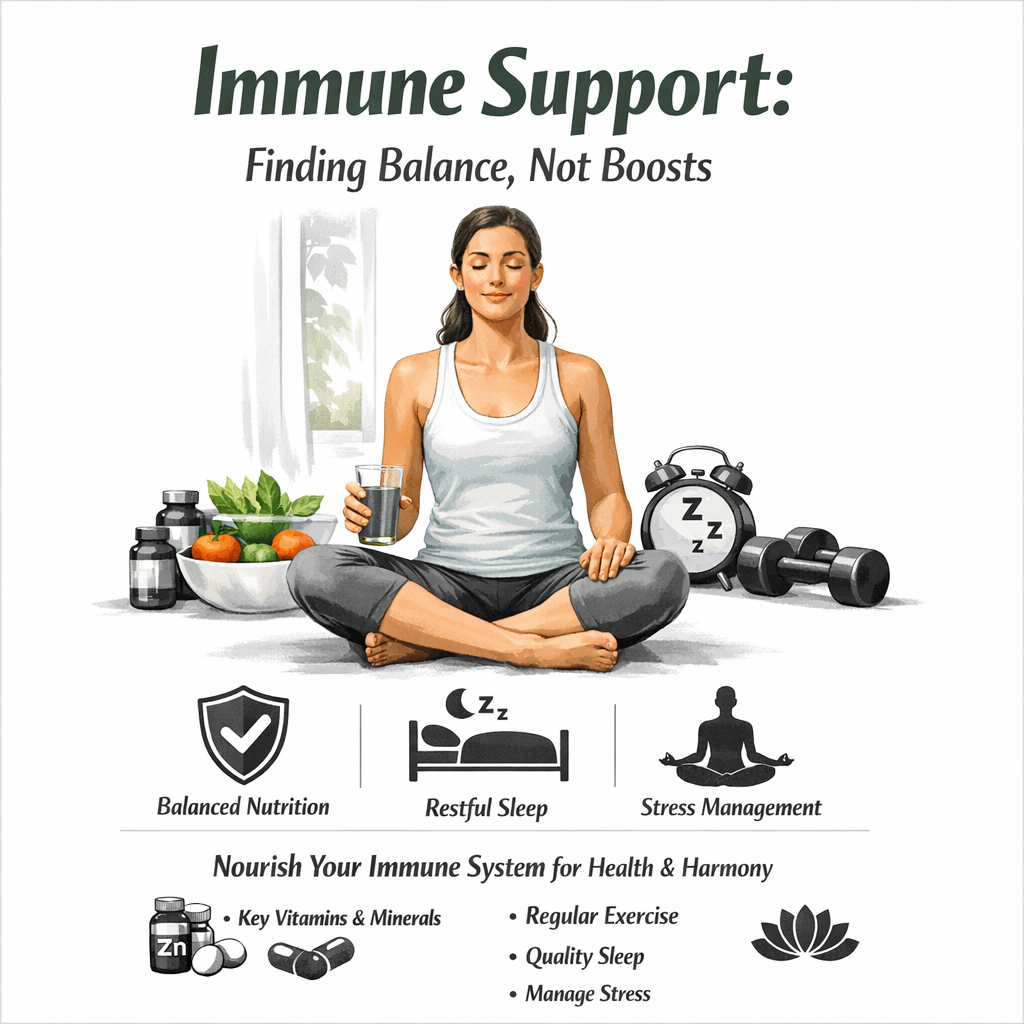
When used correctly, “immune support” refers to providing the body with the conditions and nutrients it needs for normal immune function. This includes:
- Adequate intake of key vitamins and minerals
- Sufficient sleep and recovery
- Regular physical activity
- Stress management
- A balanced, varied diet
The British Heart Foundation clearly states that there are no foods or supplements permitted to claim they protect against infection, but that nutrients such as vitamins A, B6, B12, C, D, and minerals like zinc and selenium help the immune system function normally when consumed as part of a healthy diet. [bhf.org.uk]
Diese distinctions are important, especially when reading product claims.
Why “boosting immunity” is a myth
The idea of “boosting” the immune system is appealing, but misleading. According to Harvard Health, increasing the number of immune cells or making them more active does not automatically lead to better health outcomes. In fact, an overactive immune response is linked with inflammation and other complications. [health.harvard.edu]
Scientific consensus supports the idea that a well‑regulated immune system—not an aggressive one—is more desirable.
This is why reputable health guidance consistently focuses on lifestyle patterns rather than quick‑fix solutions.
Diet and nutrients: support, not shortcuts
A balanced diet provides the building blocks the immune system relies on to function correctly. The NHS and other UK health bodies consistently state that most people can meet their immune‑related nutritional needs through a varied diet rich in fruits, vegetables, whole grains, protein, and healthy fats.
In the UK, vitamin D is a notable exception due to limited sunlight exposure for part of the year. Public health guidance recommends considering a daily vitamin D supplement during autumn and winter months. [bhf.org.uk]
Beyond this, supplements are intended to complement, not replace, healthy eating.
Lifestyle habits matter more than products
Harvard Health and the NHS both emphasise that everyday habits have a far greater impact on immune function than individual supplements. These include:
- Getting adequate sleep
- Managing stress
- Staying physically active
- Avoiding smoking
- Drinking alcohol in moderation
Harvard Health notes that general healthy‑living strategies are the most reliable way to keep the immune system functioning properly, even though no lifestyle choice can guarantee illness prevention. [health.harvard.edu]
Immune support is therefore best viewed as a long‑term lifestyle approach rather than a reactive measure taken only during winter months or when feeling unwell.
Where supplements fit in
Supplements labelled as “immune support” are regulated as foods, not medicines. This means they cannot claim to prevent, treat, or cure illness. Instead, they may contain nutrients that are known to contribute to normal immune function, such as vitamin C or zinc, when consumed in appropriate amounts.
Health authorities caution that supplements should be used responsibly and as part of a broader wellness routine, not as substitutes for diet or medical care. [bhf.org.uk]
Understanding this helps consumers make informed choices without unrealistic expectations.
A clearer, more realistic way to think about immunity
Rather than asking “How do I boost my immune system?”, a more accurate question is:
“Am I giving my immune system what it needs to function normally?”
That shift in thinking removes pressure and aligns expectations with established science.
Final thoughts
“Immune support” does not mean invincibility, nor does it offer guaranteed protection from illness. It refers to supporting the body’s natural defence systems through balanced nutrition, healthy habits, and realistic supplement use where appropriate.
When understood correctly, immune support becomes part of everyday wellness—not a promise, but a process.
Reputable external sources
- Harvard Health – How to Boost Your Immune System
https://www.health.harvard.edu/healthy-aging-and-longevity/how-to-boost-your-immune-system [health.harvard.edu/healthy-aging-and-longevity/how-to-boost-your-immune-system] - British Heart Foundation – What Should I Eat to Boost My Immunity?
https://www.bhf.org.uk/informationsupport/heart-matters-magazine/nutrition/ask-the-expert/boosting-immunity [bhf.org.uk/informationsupport/heart-matters-magazine/nutrition/ask-the-expert/boosting-immunity]